Cloud Technologies
Modern computing has shifted from local hardware to distributed networks. Cloud technologies enable on-demand access to computing resources, platforms, and software over the internet, revolutionizing both business and government sectors.
Learning Objectives
- 11.1.2.6 Describe cloud computing models (IaaS, PaaS, SaaS) and deployment types.
- 11.1.2.7 Evaluate the impact of cloud technologies on e-Government services.
Expert Explanation: Cloud Models & Services
Conceptual Anchor
The Electricity Analogy
Before the electrical grid, every factory had its own generator. It was expensive and inefficient. Then came the power grid — electricity generated centrally and delivered on demand. You pay only for what you use.
Cloud computing does the same for IT: instead of buying servers, you rent capacity from providers like AWS, Google Cloud, or Azure.
Rules & Theory
Service Models (SPI)
Cloud services are categorized into three main models based on the level of control provided to the user versus what is managed by the vendor.
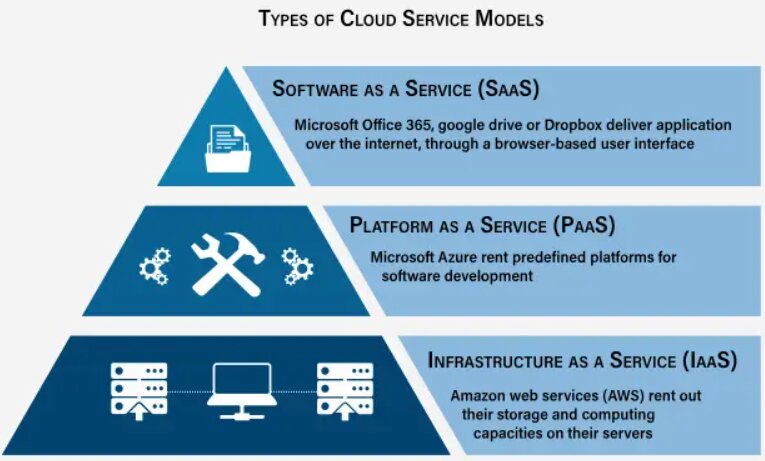
| Model | Description | Target Audience | Examples |
|---|---|---|---|
| IaaS (Infrastructure as a Service) |
Provides raw virtualized computing resources (servers, storage, networking). You install the OS and software. | System Administrators / IT Architects | AWS EC2, Google Compute Engine |
| PaaS (Platform as a Service) |
Provides hardware and a software framework. You focus solely on writing and deploying code without worrying about server maintenance. | Software Developers | Google App Engine, Heroku |
| SaaS (Software as a Service) |
Fully functional applications delivered over the web. You just use the software. | End Users | Google Workspace, Microsoft 365, Dropbox |
Deployment Models
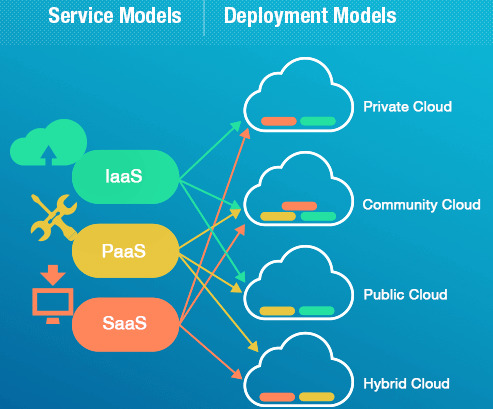
Public Cloud
Services offered over the public internet to anyone. Resources are shared among multiple organizations (multi-tenant).
Private Cloud
Cloud infrastructure operated solely for a single organization. It can be hosted internally or externally. Maximum security.
Hybrid Cloud
A combination of Public and Private. Sensitive data stays on Private, while Public is used for scaling during high traffic.
Data Sovereignty
When you upload data to the cloud, it may be physically stored in a data center in another country. That country's laws apply to your data. For example, Kazakh student data stored on US servers could be subject to US law enforcement requests. This is a major concern for governments and organizations handling sensitive data.
E-Government: The Kazakhstan Context
Definition
E-Government is the use of information and communication technologies (ICT) to provide public services. In Kazakhstan, the core infrastructure is centralized around the egov.kz platform and its mobile ecosystem.
Why it is needed
Given Kazakhstan's vast geographical size and dispersed population, relying solely on physical public service centers (ЦОН) is inefficient. E-Government provides 24/7 access, reduces bureaucratic delays, and minimizes corruption through automated, transparent processes. The deep integration of state APIs with commercial banking apps has made digital public services an everyday reality.
Application Models
| Model | Definition | Kazakhstan Examples |
|---|---|---|
| G2C (Government-to-Citizen) | Direct digital services for individuals. | Digital Documents (ID, driving license via eGov Mobile or Kaspi), registering a vehicle, booking medical appointments (Damumed), submitting official appeals via eOtinish. |
| G2B (Government-to-Business) | Services tailored for corporations and entrepreneurs. | Registering an LLP (ТОО), obtaining permits and licenses via elicense.kz, filing electronic tax returns, participating in state tenders via Goszakup.gov.kz. |
| G2G (Government-to-Government) | Internal data sharing between state departments. | The Smart Bridge platform: The Ministry of Internal Affairs seamlessly sharing digital ID data with the Ministry of Health, or automated background checks between agencies. |
Impact on Society: Benefits vs Risks
| Benefits | Limitations / Risks |
|---|---|
| High Efficiency (GovTech integration): Citizens can pay taxes, fines, or retrieve certificates directly through banking apps without visiting a physical office. | Digital Divide: Unequal access. While major cities have high-speed networks, remote villages may lack stable internet, isolating those populations from essential digital services. |
| Proactive Services: eGov uses automated triggers (e.g., sending an SMS when a child is born to register the birth and allocate benefits immediately without an application). | Data Security & Privacy: Centralized national databases are high-value targets. A breach in the State Database of Individuals (ГБД ФЛ) could expose the IINs, addresses, and digital footprints of millions. |
Worked Examples
1 School Infrastructure Migration
Scenario: A school wants to stop maintaining its own email servers and student database hardware.
Solution:
- For Email: The school switches to a SaaS solution like Google Workspace for Education. The provider handles all maintenance, storage, and spam filtering.
- For the Custom Database: The school uses an IaaS solution to rent a virtual server in a local (Kazakh) data center. They install their own database software, ensuring compliance with data sovereignty laws.
Common Pitfalls
"The Cloud Is Just Someone Else's Computer"
While technically true, cloud providers offer much more: automatic scaling, redundancy, global distribution, and professional security that most organizations can't achieve alone.
Ignoring Exit Strategy
Students (and companies) forget to plan for leaving a cloud provider. Vendor lock-in can make migration extremely expensive and time-consuming. You must always plan how to retrieve your data.
Tasks
Define IaaS, PaaS, and SaaS. Give one real-world example of each.
Explain the concept of Data Sovereignty and why it is a critical issue for E-Government portals.
A startup company wants to develop a new mobile game but does not want to buy physical servers or install operating systems. Which service model (IaaS, PaaS, or SaaS) should they choose and why?
Evaluate the benefits and drawbacks of using a Hybrid Cloud deployment compared to a Public Cloud deployment for a major bank.
Self-Check Quiz
Q1: Which cloud service model is Google Docs an example of?
Q2: What is the main risk of failing to plan an "Exit Strategy" from a cloud provider?
Q3: Which deployment model involves sharing resources with other organizations over the internet?